

Help & support





Getting money into your SMSF
Before your SMSF can receive money from another super fund, make sure the fund is set up, and its details are up to date with the Australian Taxation Office (ATO). This includes having an Australian Business Number (ABN), a 'registered' or 'complying' status on Super Fund Lookup, an active electronic service address (ESA) that supports rollovers, and an SMSF bank account recorded with the ATO.
The SMSF bank account can be used to receive rollovers and contributions, receive investment income, and pay fund expenses and liabilities.
There are 3 main ways an SMSF's balance can grow
- Rollover of existing super from another fund
- Contributions from employers, members, spouses or, in some cases, the government
- Investment earnings generated from assets already held by the fund, such as interest, dividends, distributions and capital growth
This money may be invested in line with your fund's investment strategy and superannuation rules, with any earnings generally remaining within the fund until they're eligible to be paid out.
Rolling over super into your SMSF
What is a rollover?
It's when existing super is transferred from one super fund to another, such as from an industry or retail fund into an SMSF.

Getting your SMSF ready for a rollover
- Before requesting a rollover, make sure your SMSF's details are up to date and it's ready to receive the rollover
- Check the ATO's rollover requirements and contact your transferring fund for any additional requirements that may apply
- Your SMSF administrator or accountant will usually do this for you
- Missing or inconsistent details could result in delayed or rejected rollover requests
Important: Check your insurance before rolling over
Rolling over from an industry or retail super fund may mean you lose any insurance cover attached to your account, such as life, total and permanent disability, or income protection insurance.
Before rolling over, review any insurance and benefits in your current fund. These can't be transferred to your SMSF, so you may need separate cover or a 'partial rollover' to keep some super in your current fund. Check with the fund about any other steps needed to retain your insurance.
How a rollover is initiated
When you are prepared, you can request a rollover from your existing fund.
You can start the process through your MyGov account, or by contacting your previous fund directly. Partial rollovers are unable to be completed through MyGov.
For more information, read the ATO's guidance on rollovers
Making contributions to your SMSF
A contribution is money or an eligible asset added to a member's super balance. It may come from an employer, the member, their spouse or, in some cases, the government. Superannuation laws set rules and limits about what contributions an SMSF can accept.
Types of contributions
There are two main types of contributions. Different rules and annual caps apply to each type.
Concessional contributions
These contributions are generally contributions made from before-tax income. They can include:
- Employer contributions, including Super Guarantee contributions
- Salary sacrifice contributions
- Personal contributions for which a tax deduction is claimed
These contributions are generally taxed when they're received by the fund and count towards the concessional contributions cap.
Non-concessional contributions
They're generally made from money that's already been taxed. This may include personal contributions made from savings or other after-tax money. A separate cap and rules apply to these contributions.
Common ways contributions are made
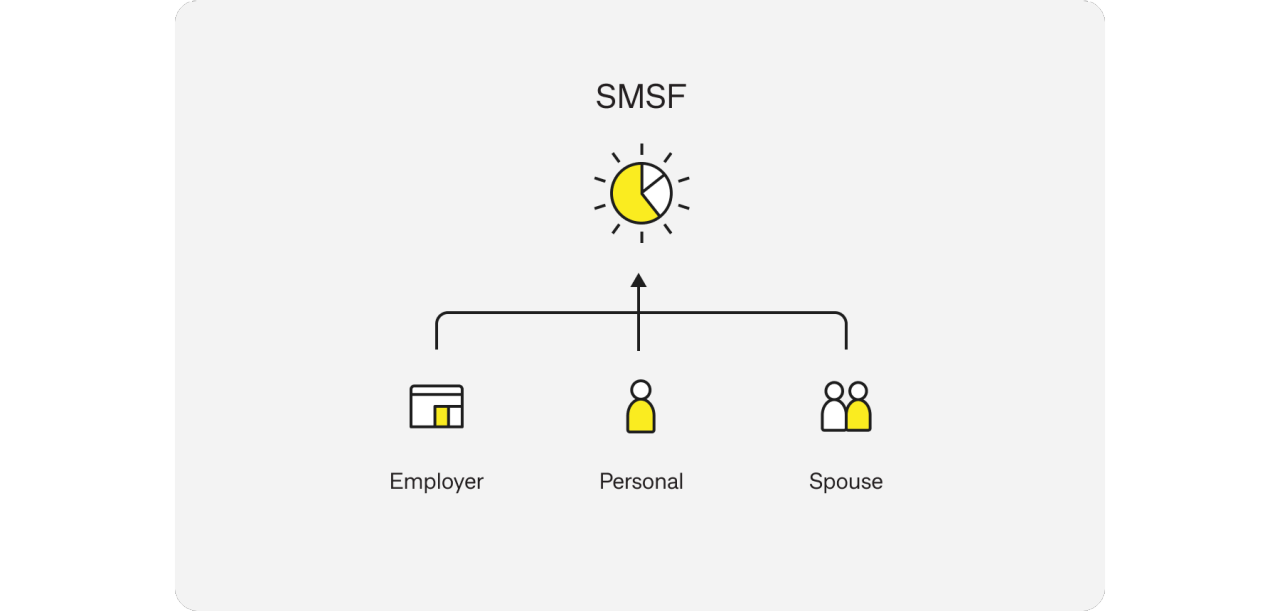
- Employer contributions: Transferred to your SMSF using the fund's ABN, bank account details, and an ESA (for contributions sent through SuperStream, e.g. from non-related employers)
- Personal contributions: Members can contribute their own money directly to the SMSF from personal savings or income
- Spouse contributions: A spouse can make contributions on behalf of an eligible SMSF member
How contributions are paid
Contributions are usually paid as cash into the SMSF's bank account. In some cases, eligible assets, such as listed shares and other investments, can be transferred to the fund instead. The transfer must meet superannuation rules.
Contribution caps and rules
Contribution caps apply to contributions made to super each year, and exceeding these caps may result in additional tax or other consequences. The rules that apply may depend on the member's age, their total super balance, or the type and amount of the contribution.
Important
- Check contribution caps and eligibility: Confirm you are eligible to contribute and that the amount stays within the contribution caps to avoid excess contributions as these can involve extra tax
- Record and report the contribution: Keep records of all contributions and ensure they are correctly classified and reported in the SMSF's annual return. Your accountant or SMSF administrator may assist you with this, if you use one
Summary
- Confirm that members are eligible to make and receive contributions and stay up to date with the current contribution caps
- Keep records of all contributions, make sure they're correctly classified and report them in the SMSF's annual return. If you have an accountant or SMSF administrator, they may assist you with this
- Make sure your SMSF's bank account is used solely for fund transactions and kept separate from any transactions unrelated to the SMSF
- Setting up and running an SMSF involves ongoing legal and administrative responsibilities. Consider seeking professional advice before making decisions about moving money into or out of an SMSF
- Be wary of unsolicited advice. If you're ever contacted by someone encouraging you to roll your super into an SMSF, or invest in a specific opportunity, treat it with extreme caution. If in doubt, speak with an independent and licensed adviser, or visit ASIC's MoneySmart website
